

Filius | Broccolo Fiolaro di Creazzo Seed
$9.58—$223.66gst incl.

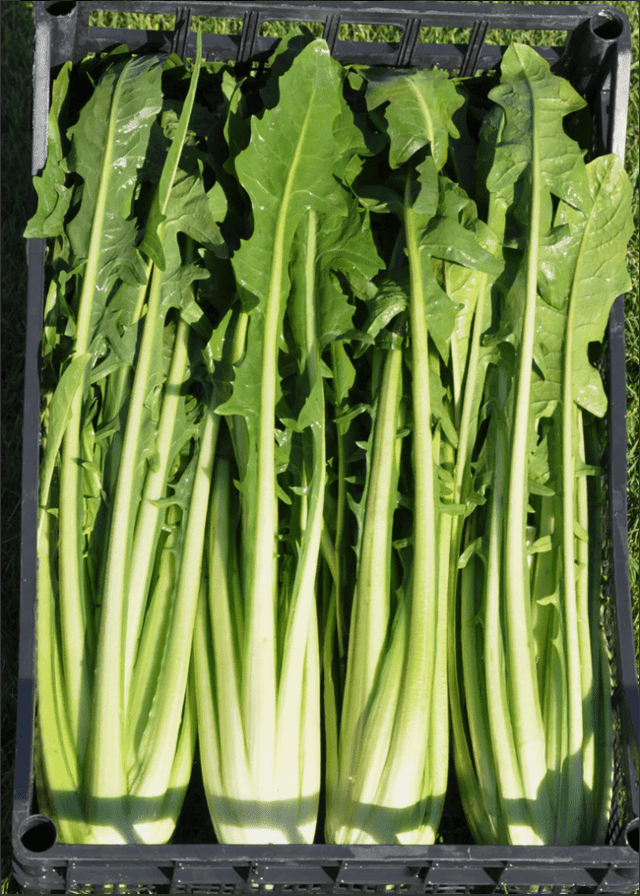
Broccolo Fiolaro di Creazzo ‘Filius’ is based on the old local ecotype, an heirloom maintained on local farms for centuries. Part of the Smarties.bio project to save biodiversity. Gusto Italiano Project
- Filius has high productivity of “fioi” the characteristic dark coloured bunches providing high yields
- Professional Seed. Recent selection work by Smarties.bio provides suitability for commercial application, high level of uniformity and yield
From Lane Selman of the US Culinary Breeding Network:
“During the Radicchio Expedition we visited Farmer/Seed Saver/Plant Breeder Andrea Pitton of Azienda Agricola Pitton who is known for his own radicchio selections and other vegetables in Rivignano in the Friuli-Venezia Giulia region of Italy in his field of Broccolo Fiolaro (Brassica oleracea). The cultivation of Broccolo Fiolaro dates back several centuries. The seed has not been commercial, rather saved from season to share and shared from farmer to farmer. Smarties.bio is now offering the seed commercially and maintaining the quality of this Italian heritage Brassica. Andrea Pitton says ‘Filius…it’s great in a frittata and as pesto made with walnuts or pine nuts and without cheese.. ‘(recipes to come).
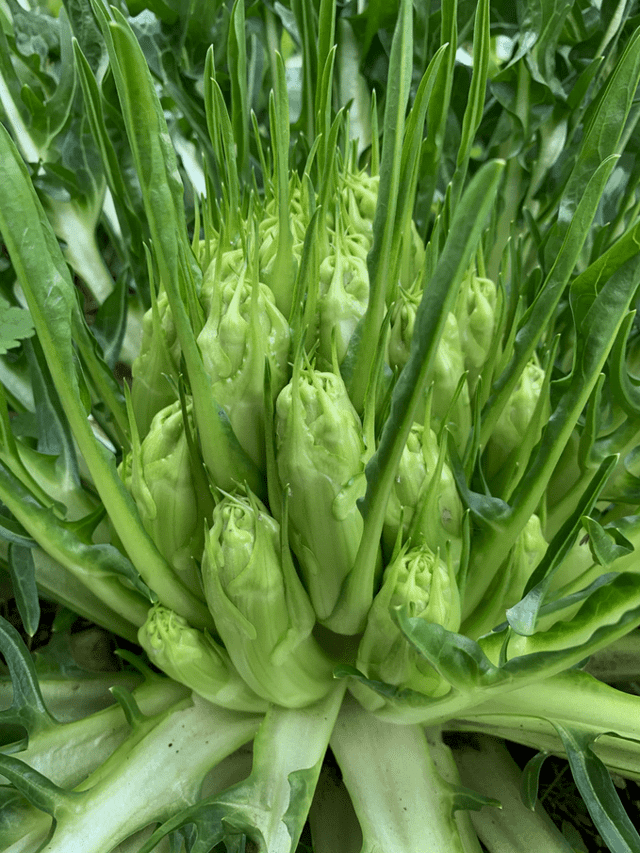
Broccolo Fiolaro is on the Slow Food Ark of Taste list which is a living catalog of delicious and distinctive foods facing extinction. From their site: “The name of Fiolaro broccoli derives from the presence of sprouts along the stem of the plant (known in local dialect as “fioi”) that end up in the pan, along with the youngest leaves. It is a product that is particular in that it does not have the typical taste or shape of other varieties of broccoli. The broccoli harvest happens between November and February, but according to tradition the most flavourful samples are those after the first frost, when, to defend themselves against the cold, the plants limit the amount of water held in their tissues, concentrating salts and sugars and making them more tasty. This variety of broccoli is rich in vitamins, mineral salts and calcium. The cultivation of this Fiolaro broccoli dates back to ancient Roman times. Cato the Elder spoke of it, recognizing its medicinal properties. Today, the typical production area is the hill of Creazzo, in the province of Vicenza in northeastern Italy. Fiolaro broccoli is at risk of disappearing because currently there are only two main producers. Moreover, the product is, for the most part, known only within its production area.”
Key features
- Specialty crop – Commercially viable heirloom
- Excellent uniformity and suitable for multiple plantings
- Calibrated seed for precision seeding
- High germination rate and certified Xanthomonas and Pseudomonas free seed
- Days to Maturity: 80 days
- Certified organic: CCPB F253
Quantity
Categories
Plant Family
Notifications
Growing Conditions
Brand Catalogue
Growing Information
SCIENTIFIC NAME: Brassica oleracea var. italica
INTENSIVE SPACING: 2 rows per bed spaced every 45cm on the row
PAPERPOT TRANSPLANTER: Use LP303-15 paper Chain-Pot s and remove every second seedling at nursery stage. Transplant after temperatures average above minimum 10C.
CULTURE: Broccoli as well as cauliflower, Brussels sprouts, cabbage, and related brassicas are heavy feeders. They require fertile soils in a pH range of 6.5-7.5, supplied with consistent irrigation throughout the growing period.
EARLY SPRING CROP: Use early and mid-season varieties. Sow 2 seeds per cell in 50-72 cell plug flats, 3-4 seeds/2.5cm. in 20 row flats, or in outdoor beds 6mm deep. Seedlings should be ready to transplant in 4-6 weeks. If possible keep soil temperature over 24C until germination, then reduce air temperature to about 16C. Transplant outdoors, 4-6 weeks after sowing, 30-45cm apart in rows 45-90cm apart. Cabbage prefers cooler growing temperatures, between 13-24C, optimum being 16-21C, but will produce good crops under warmer, summer conditions.
AUTUMN CROP: Use mid-season and storage varieties. Start seedlings as above in November and transplant to the garden in December-January. To ensure mature heads, seed the crop early in areas where heavy freezes occur early in autumn.
WINTER CROP: Successful cabbage crops can be grown where winters are mild (temperatures rarely below 0C). Transplants can be set out from March to August in these regions.
DIRECT SEEDING: Sow 3-4 seeds 30cm apart, 12mm deep, rows 60-90cm apart, thinning to one plant in each group.
SPLITTING: Early varieties may split or burst at maturity or from rapid new growth if rain or heavy irrigation follows a dry spell. Splitting may be partially avoided by slowing a plant’s growth. To accomplish this, cultivate close to plants to sever some of the root system, or by slightly twisting the plant.
DISEASES: Adhere strictly to a preventive program including: (1) long crop rotations with non-cruciferous crops, (2) clean starting mixes and outdoor seedbeds, and (3) strict sanitation practices.
INSECT PESTS: Repel flea beetles and root maggots on young seedlings by covering with floating row covers from day of planting. Treat flea beetles with insecticides such as pyrethrin or azadirachtin if heavy pressure is observed. For cabbage worms and loopers, use Bacillus thuringiensis (Bt) ‘Dipel’. Cutworm prevention: cultivate soil 2-4 weeks before planting to work in cover crops and destroy weeds.
HARVEST AND STORAGE: Relatively young heads (still green and actively growing) store best. Ideal conditions are 0C, at 95-98% relative humidity, with good air circulation. Store only disease-free heads.
DAYS TO MATURITY: From cool weather, spring transplanting. Subtract 10-14 days for late spring or early summer, warm weather transplanting. Add about 14 days for direct seeding.
AVG. PRECISION SEEDING RATE: 100 seeds/15metres, 500 seeds/83metres, 1M/165metres, 29M/acre at 2 seeds/30cm. with rows 90cm apart.
SIZED SEEDS: Standard except where noted.
SEED SPECS: SEEDS/500g.: 67,500-164,300 (avg. 108,600)