

Voglia | Rosa Di Gorizia Chicory Seed
$7.43—$149.22gst incl.

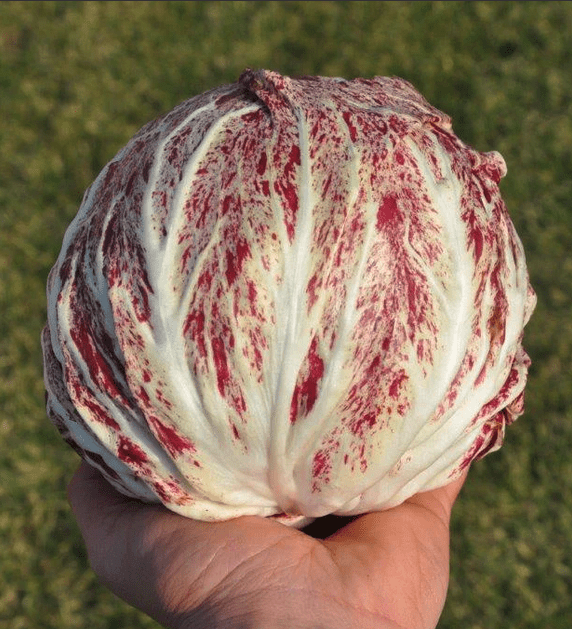
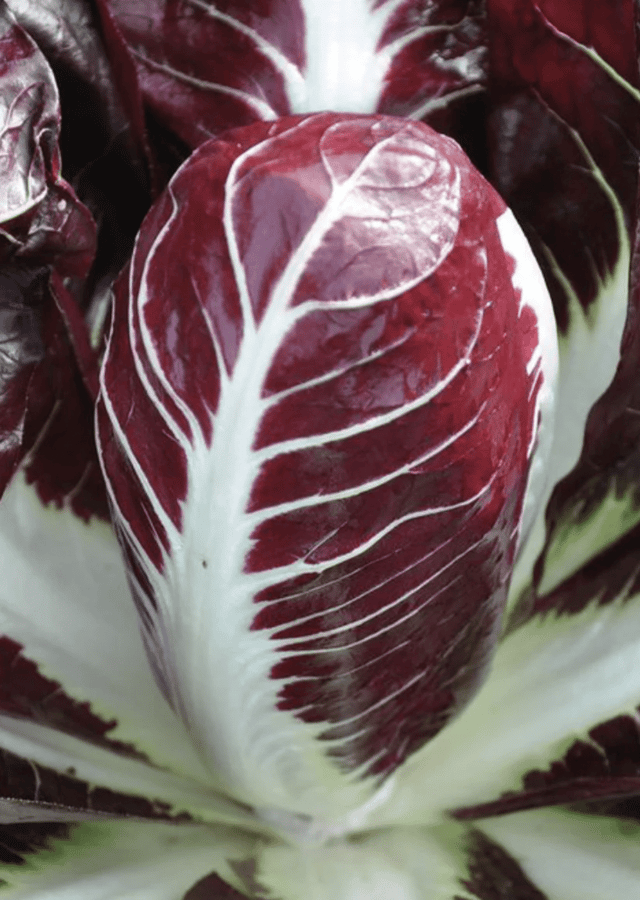
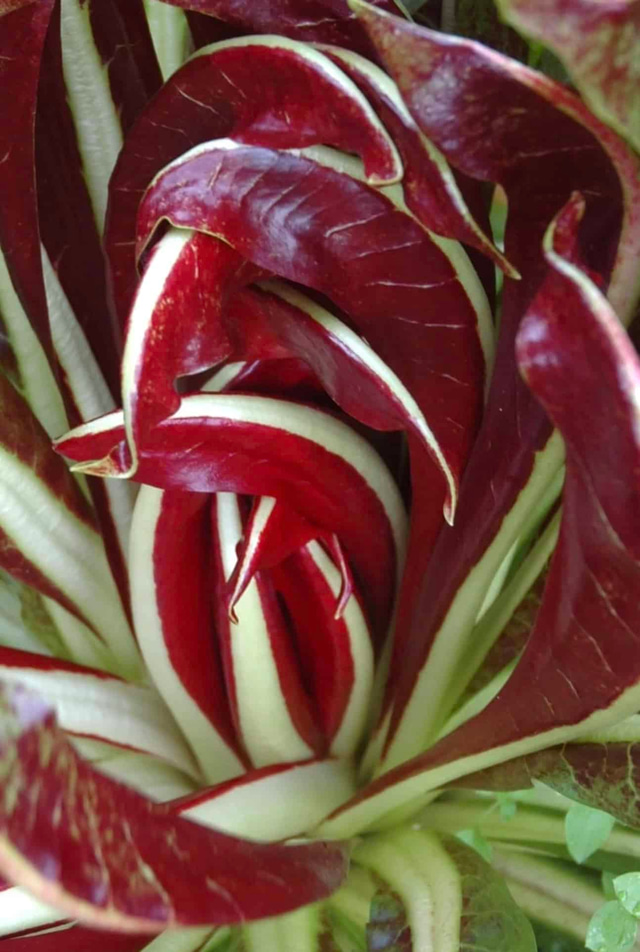
Voglia produces stunning rose shaped rosetted in tones of pink to deep burgundy
‘Voglia’ Rosa di Gorizia is a delicious bite, with a subtle and refreshing bitterness and delicate crispness and if you are a lover of plant form or just a lover of exquisite beauty, the result will take your breath away. Smarties.bio ‘s Voglia is a robust type with slightly thicker leaf and sturdier ribbing than others. Its leaf margins tend to be lightly serrated and there is often a colour contrast between the top and bottom of the leaf, providing a very elegant look. It is very uniform in shape and very cold hardy. Similarly Voglia seems less affected by rot or decay if you opt for ‘forcing’
Generally start forcing Gorizia/Isontina types in June. The plants will look quite a bit less vigorous in the field, the outer leaves start to decay a bit, and the energy is very much focused in the centre of the rosette. At this point lift the plants, shake off the roots, and pull off all but the very small centre-most leaves. Gorizia must be forced in darkness. The folks at Uprising Seeds do theirs in a medium of damp sand mixed with coco coir, though it can also be done in damp wood shavings, or even packed in totes in water like Treviso Tardivo. Air circulation is helpful so closing them in a bin with a lid on it to achieve darkness isn’t the best strategy. Root cellars, dark closets, dark basements are all great places. 15.5C or under is best
As with all radicchio, be especially mindful of your planting dates as a successful crop requires a much narrower planting window than most garden vegetables.
*Voglia (ex #SM4.31 is offered as part of the “Gusto Italiano Project”, a collaborative partnership. Organically grown seed, bred in Italy by Smarties.Bio
Key features
- Culinary delicacy, subtle and refreshing bitterness and delicate crispness
- Robust, can be used as a forcing type, add two weeks from harvest
- Flexible cycle for harvesting from the beginning of June to the end of winter
- Extremely cold hardy
- Suits fresh market
Quantity
Categories
Plant Family
Notifications
Growing Conditions
Harvest Season
Brand Catalogue
Growing Information
Voglia | Rosa Di Gorizia Chicory Seed
SCIENTIFIC NAME: Cichorium intybus
CULTURE: Radicchio is primarily an autumn and winter crop, native to the Veneto region in northern Italy. It is the cool temperatures and overnight frosts of autumn that bring out the tenderness and sweetness that balances the bitter notes. Its ideal conditions are a temperate climate with a gradual transition to the cool days and frosty nights of autumn. You can also have success in places with rapid harsh transitions, but it’s often best to focus on the earlier maturing radicchio strains (Chioggia, Verona, Treviso precoce, Lusia, Rosa) in those places for the best success. Warmer climates, that don’t achieve cool enough temps in the autumn and winter, can produce aesthetically attractive crops but they tend to be more bitter as they do not experience the sweetening effects of frosty nights around harvest
- Ideal radicchio conditions are a temperate climate with a gradual transition to the cool days and frosty autumn nights
- For regions of rapid harsh transitions, focus on the earlier maturing radicchio strains
- Warmer climates that don’t achieve cool enough temps in the autumn and winter can produce aesthetically attractive radicchio crops but they tend to be more bitter as they do not experience the sweetening effects of frosty nights around harvest
Succession harvests are achieved with a single, narrowly timed planting of several varieties of the same type with different days to maturity, sometimes referred to as “slotting”, as an example, there are different selections of “Verona” types that mature anywhere from 55 to 120 days. Using these different slotted varieties you can maintain harvests over a couple months from a single sowing of multiple ‘day-to-maturity’ varieties. The longer ‘days-to-maturity’ varieties often provide the greatest reward in terms of size and quality, but also come with the greatest risk of unfavourable weather and severe cold as you move later into the winter. Earlier maturing DTM varieties often offer the greatest flexibility of planting dates as well as reliability of successful harvest
- Succession harvests achieved with a single, narrowly timed planting of several varieties of the same radicchio type with different days to maturity. Referred to as “slotting”
- Later DTM varieties often provide the greatest reward in terms of size and quality
- Earlier DTM varieties often offer the greatest flexibility of planting dates as well as reliability of successful harvest depending on climate
As radicchio continues to gain popularity here in Australia, increasingly, seed with this quality of specificity is becoming available. We are leagues from where we were even 5-10 years ago in terms of the genetics available to Australian growers. Our partnership with Smarties Bio, a young northern Italian Seed Breeding company doing this work in the context of organic field systems, represents a leading edge of this work
TIMING: Radicchio is best sown (usually in flats) from mid-December through the first third of January. Heading varieties (Chioggia, Verona, Treviso precoce, Lusia, Rosa) are better sown towards the earlier part of this window. Looser or more cold tolerant varieties (Gorizia/Isontina, Castelfranco, Treviso Tardivo, Catalogna) or the earliest slotted varieties of the heading types, have more flexibility and can be successfully sown later in the window.
SELECTION CYCLES: (days to maturity slots). For most vegetables growers stagger planting dates to provides a continuous harvest. With radicchio, a different strategy is employed. For most, heading radicchio is best suited to seeding around the summer solstice, Dec 21st to Jan 3rd, transplanting 3-4 weeks later. To achieve extended harvest periods, rather than staggering planting dates, radicchio uses days-to-maturity options within a type. These are often referred to as “slots” with many types having early, mid, and late slotted varieties
THERMAL DORMANCY: Radicchio seed becomes dormant above 25°C. Optimum germination temperature range is 15.5-20°C
TRANSPLANTING: Sow in flats, 4 seeds/25mm, or in 20mm plug trays, barely covering seeds with fine vermiculite, 3-4 weeks before transplanting outdoors. Shade the flats on sunny, warm days if necessary to keep the soil surface cool, below 24°C, until germination. If sowing into flats, transplant 25-50mm apart into flats, pots, or cell-type containers about 2 weeks later. Harden seedlings by reducing water and temperature for 2-3 days before planting outdoors. Properly hardened transplants can survive temperatures as low as -6°C. Transplant 20cm apart in rows 45cm apart. Transplant shallowly so that the base of the plant will be slightly above the soil to discourage bottom rot
DIRECT SEEDING: Seeds will germinate from ambient teperatures ranging 5-29°C, the highest germination percentage will occur around 24°C, depending on the variety and seed lot. Sow seeds 25mm apart, rows 30-45cm apart. Cover seed lightly, about 3mm, and firm soil gently. Thin to 20cm apart; thinnings may be transplanted. Ensure soil is kept moist for coolness and moisture, and for uniform germination. NOTE: Radicchio grows best in cool or mild weather, i.e. autumn, winter, and spring but summer crops of some types can be successful if nights are cool 16°C
FERTILISATION: Transplant into light to moderately fertilized beds. If radicchio becomes a larger and larger part of your garden or farm, a couple nutrients to consider correcting for if deficient, are calcium (if you consistently see tip burn in the leaves) as well as boron
DAYS TO MATURITY: See ‘Radicchio cycle slotting’
HARVEST: Colour deepens as plants mature and the days get cooler and shorter. Judge maturity by giving heads a gentle squeeze to gauge density. Harvest when they have filled out in the centres.
AVG. DIRECT SEEDING RATE: 1M/67 metres, 131,000/acre at 3 seeds every 20cm in rows 45cm apart
TRANSPLANTS: Avg. 500 plants/1000 (2 seeds per cell thinned to one seedling)